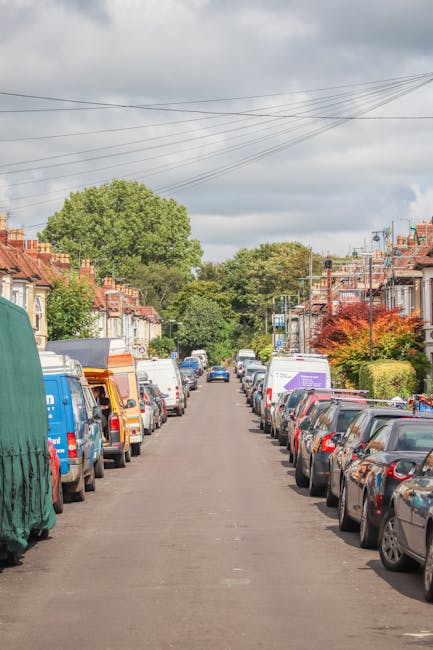
Redbridge council rules Aldersbrook removals parking permits: a practical guide for move day
If you're moving in or out of Aldersbrook, the parking side of the job can become the bit that quietly causes the most stress. Redbridge council rules Aldersbrook removals parking permits affect where the van can stop, how long it can stay, and whether your move begins calmly or with a frustrating scramble for space. The good news? With a little planning, it's manageable. In this guide, we'll walk through how local parking permits usually fit into a removals day, what tends to trip people up, and the practical steps that help you keep the move efficient, legal, and a lot less nerve-racking.
Why Redbridge council rules Aldersbrook removals parking permits Matters
Parking is one of those things people assume will "sort itself out" on the day. Then the van arrives, the street is tight, and suddenly everyone is reversing, waiting, or trying not to block a neighbour's driveway. In a place like Aldersbrook, where roads can be busy, residential parking can be limited, and access can feel narrower than it looked at 9 a.m. in the planning stage, that assumption can cost time and money.
Redbridge council rules matter because they shape what a removals team can legally do with the vehicle. If a permit, bay suspension, or waiting restriction applies, ignoring it can lead to penalty charges, delay, or a van having to park farther away than expected. That may not sound dramatic, but on move day every extra few metres matters. Boxes get heavier. Sofas get awkward. And the clock keeps moving.
There's also the neighbour factor. Good parking planning means less congestion, less noise from repeated shunting, and fewer awkward conversations on the pavement. To be fair, nobody wants to begin a house move by annoying the whole street before the kettle has even boiled.
For local moves, the parking plan is part of the logistics, not an afterthought. It influences whether a team can work efficiently, whether lift times stay realistic, and whether your move feels organised or improvised. That is why people who plan around parking tend to have a calmer day overall.
How Redbridge council rules Aldersbrook removals parking permits Works
The exact arrangement depends on the road, the time, and the type of vehicle involved. In practice, removals parking often comes down to a few common scenarios:
- Controlled parking bays: These may require a permit or only allow limited stay periods.
- Yellow line restrictions: Stopping may be limited, and loading rules can still be subject to local conditions.
- Single-access streets or narrow roads: A van may need a very specific loading position to avoid blocking traffic.
- Permit-only residential zones: These can be straightforward if planned ahead, but awkward if guessed at the last minute.
The practical job is usually to identify the best loading point for the removal van, then check whether that spot can legally be used during the move window. If not, the team may need an alternative nearby space, a short waiting arrangement, or a permit-based solution. Sometimes there is more than one workable option; sometimes there really isn't. Streets can be funny like that.
If your removal company is experienced with local jobs, they'll normally think in terms of access, loading distance, and timing rather than just "can the van fit here?" That distinction matters. A van might technically fit but still be a poor choice if doors open onto traffic, if pedestrians are squeezed through, or if there is no realistic space to carry furniture safely.
For a smooth process, a good removals plan usually combines three things:
- Location assessment before move day.
- Parking compliance with local restrictions.
- Timing flexibility in case the best spot is temporarily unavailable.
If you're arranging a local move and want to reduce the chance of avoidable delays, it often helps to combine parking planning with broader move preparation. Useful reads like the decluttering guide for moving and packing tips from a pro can make the whole day more manageable, especially when time is tight.
Key Benefits and Practical Advantages
When parking is sorted properly, the benefits are not glamorous, but they are real. And on move day, real is what counts.
- Faster loading and unloading: Less distance between door and van means fewer trips and less fatigue.
- Lower risk of fines or disruption: A valid arrangement reduces avoidable parking issues.
- Better protection for belongings: Shorter carry distances lower the chance of knocks and drops.
- Less stress for everyone involved: Especially useful if children, pets, or older relatives are around.
- More accurate scheduling: When parking is predictable, the move time becomes more reliable too.
There's another advantage people often miss: better parking can improve safety. Furniture carried over a short, clear route is easier to manage than a sofa being threaded around parked cars, kerbs, and impatient traffic. It sounds obvious. Yet in real life, people overlook it all the time.
For tenants, landlords, and homeowners alike, the payoff is mostly peace of mind. You know where the van is going to be. You know who is handling the space. And you're less likely to be standing in the doorway saying, "It'll be fine," while obviously hoping it will be fine.
Who This Is For and When It Makes Sense
This topic matters for more people than you might think. It isn't only for big family house moves with multiple vans and a mountain of boxes. In Aldersbrook, parking rules can matter just as much for a one-bedroom flat move, a student move, or a small furniture delivery.
You'll likely need to think about parking permits if you are:
- moving house on a residential street with controlled parking
- relocating from a flat where the nearest legal loading point is not right outside
- moving a piano, sofa, freezer, or other bulky item that needs close access
- organising a same-day removal and have no room for error
- booking a removal van for a short-notice slot during a busy time of day
It also makes sense for people who are not moving far but still need a van on the day. Local doesn't always mean easy. A ten-minute journey can still become a tricky job if the street layout is awkward or permits are overlooked.
If you're planning a flat move, you may also find it helpful to look at flat removals in Aldersbrook and the practical advice in the Wanstead flats removals guide, especially if stairwells, shared entrances, or parking bays all play a part in the move.
Step-by-Step Guidance
Here is the simplest way to approach the parking side of a move without turning it into a second job.
- Check the street conditions early. Look at whether the road has permit-only bays, yellow lines, loading restrictions, or limited waiting. Even a quick visual check can flag issues early.
- Map the best loading point. The nearest place to park is not always the best place. Think about safety, door access, and room to manoeuvre.
- Decide whether a permit or exemption is needed. For some streets, it will be obvious. For others, there may be loading exemptions or timing windows that help, but don't assume.
- Speak to the removals team before move day. Share the property type, road layout, and any known restrictions. A good team can plan around the space.
- Build a buffer into the schedule. If parking is tight, avoid a plan that relies on everything running to the minute. That rarely ends well.
- Keep key documents and contact details ready. If a permit reference, booking confirmation, or landlord note is needed, have it close at hand.
- Confirm the final parking plan on the day. A road that looked clear yesterday may be full this morning. Bins, delivery vans, and school runs all have a habit of appearing at the worst moment.
If you want a move that feels less rushed, pairing this parking preparation with timed delivery planning can help create a more realistic schedule. For items that are already boxed and ready, a pack-and-wait approach can also reduce the amount of last-minute chaos.
Expert Tips for Better Results
Experience teaches you a few small truths. One of them is that parking problems are easier to solve two days before the move than two minutes before the van arrives.
Here are the habits that tend to pay off:
- Plan for the biggest item first. If the sofa or wardrobe is the awkward piece, work backwards from that.
- Assume the street will be busier than you expect. That's usually the safe bet in London.
- Keep walk routes clear inside the property. Parking is only half the story; indoor route planning matters too.
- Use clear labels on boxes. It saves time when unloading has to happen a little farther from the door.
- Check for low trees, tight corners, and overhanging branches. They can become annoying obstacles with taller vehicles.
A small but useful tip: if you live in a road where parking is technically possible but a bit uncertain, take a couple of photos in daylight. A quick image of the frontage, the bay, and the nearest loading area can be surprisingly useful when discussing the move with your team. It sounds simple because it is simple. And simple is good.
You'll also get better results if you prepare the rest of the move properly. Articles like premove cleaning tips and how to move house without stress are worth a look if you want the whole process to feel less chaotic.
Common Mistakes to Avoid
Most parking issues on removal day are avoidable. They usually happen because of one of a handful of predictable mistakes.
- Assuming "loading only" means "anything goes": It doesn't. Local restrictions still matter.
- Leaving parking planning until the morning of the move: That's how people end up improvising.
- Forgetting the van size: A small parking bay may not work for a larger vehicle, especially if loading doors need space.
- Not telling the removals company about access issues: If they do not know, they cannot plan.
- Blocking neighbours or driveways temporarily: Even a short stop can create friction and delay.
- Ignoring school-run, bin-day, or commuter traffic: These everyday patterns can wreck a tight loading plan.
Another mistake is underestimating how long things take once the van is parked. You might think, "It's only one flight of stairs and a short walk." Then the chest of drawers turns out to be wider than the landing. Happens all the time, honestly.
If you are moving in a narrow-access area, it's worth reading what to know about narrow access removals before you commit to a schedule. That kind of planning can save a lot of awkward backtracking.
Tools, Resources and Recommendations
You do not need a huge toolkit for this. Mostly you need good information, a realistic plan, and the right support at the right time.
Useful things to have in place include:
- A written move plan with timings, addresses, and contact numbers
- Photos of the property frontage and the access route
- Box labels so unloading is quicker
- Basic protective wrapping for furniture edges and surfaces
- Confirmation of parking arrangements or alternative loading options
If the move involves special items, the preparation changes a bit. For example, large furniture may benefit from extra wrapping and staged placement. A piano needs a more careful approach altogether, and freezer moves need proper handling so the appliance stays protected. In those cases, it helps to use services and advice tailored to the item, such as furniture removals, piano removals, and storage support through storage in Aldersbrook if the timing between moves is not lining up neatly.
For general move preparation, the site's packing advice and heavy lifting guidance can be surprisingly useful. Nobody wants to discover halfway through the day that the biggest box contains books, right when the van is parked three houses away.
Law, Compliance, Standards, or Best Practice
Parking, loading, and stopping rules are not just suggestions. In the UK, they are governed by local traffic controls, highway rules, and the specific restrictions set for each street or bay. In practical terms, that means you should treat signage, permit conditions, and loading windows seriously rather than assuming removals work is automatically exempt from everything.
The safest best practice is simple:
- read the street signs carefully
- do not assume a loading exception applies unless you know it does
- plan around peak traffic where possible
- avoid blocking access points, driveways, or emergency routes
- keep written confirmation of any permit or booking detail that supports your move
For a removals business, compliance is also about safety. A driver needs to think about the public, the pavement, the vehicle, and the people carrying furniture. A move that is technically fast but unsafe is not a good move. Not really.
If you want reassurance on safety and handling standards more broadly, it's worth reviewing insurance and safety information alongside the company's health and safety policy. For customers who care about broader operating standards, the company's terms and conditions and privacy policy also help set expectations clearly.
Options, Methods, or Comparison Table
There is more than one way to handle parking on move day. The best option depends on the road, the van, and how much access you actually have.
| Approach | Best for | Pros | Watch-outs |
|---|---|---|---|
| Direct roadside loading | Short, simple moves with clear access | Fast, convenient, minimal carrying distance | May be impossible on restricted streets |
| Permit-based parking | Controlled roads and longer jobs | More compliant and predictable | Needs planning and possibly advance checking |
| Nearby legal bay with short carry distance | Tight streets or mixed restrictions | Often realistic and flexible | Longer carries mean more time and effort |
| Staged loading with timed arrival | Busy roads and larger household moves | Reduces congestion and stress | Requires coordination and a bit of patience |
In many Aldersbrook moves, the best answer is not the nearest space but the safest workable one. A sensible compromise often beats a perfect plan that cannot actually happen. That's just move day reality.
Case Study or Real-World Example
Imagine a small two-bedroom flat move from a street in Aldersbrook where the closest parking is permit-controlled and the road narrows near the property. The family has a sofa, a bed, and several heavy boxes, plus a narrow stairwell that already makes carrying awkward. On paper, the move is manageable. In practice, it could become messy if the van arrives without a parking plan.
In a situation like that, the smartest approach is usually to identify a legal loading point before the van arrives, check the time window for parking, and stage boxes near the exit so the team can move quickly once the vehicle is in place. If the main street is too tight, a nearby legal bay may be the safer choice, even if it means a slightly longer carry.
What makes the difference is not luck. It is clear communication. When the customer gives accurate access details, the removals team can plan the route, bring the right equipment, and avoid wasting time circling the block. The whole move feels calmer. Not perfect, maybe, but calm enough. And that counts for a lot.
That same kind of planning also helps when you are facing last-minute changes. If your move date shifts or the parking situation becomes less certain, local support like last-minute booking advice and same-day removals guidance can help you think through the next step without panic.
Practical Checklist
Use this checklist before move day. It's simple, but it covers the essentials.
- Confirm the full address and any access notes
- Check whether the street has permit-only parking or loading restrictions
- Decide where the van can legally stop
- Tell the removals team about narrow roads, bays, or height restrictions
- Identify any large items that need closest access
- Prepare box labels and protective wrapping
- Keep your booking details and contact information ready
- Allow a time buffer for parking or unloading delays
- Warn neighbours if a temporary loading stop is likely
- Have a backup plan if the best space is occupied on arrival
Quick reminder: a good parking plan is not about being overly cautious. It's about making the whole move work properly. Different thing entirely.
Conclusion
Redbridge council rules Aldersbrook removals parking permits are not the most exciting part of moving, but they often decide how smoothly the day runs. If you get the parking side right, everything else becomes easier: the carry is shorter, the timetable is steadier, and the whole move feels more under control. If you get it wrong, even a small move can turn into a long afternoon of delays and mild regret.
The best approach is straightforward: check the restrictions early, plan the loading point carefully, tell your removals team what they need to know, and leave a little breathing room in the schedule. That's usually enough to turn a stressful unknown into a manageable task. And if you've ever moved on a rainy London morning with the clock ticking and a sofa in the doorway, you already know how valuable that can be.
Get a free quote today and see how much you can save.
For tailored help with planning, access, and move-day logistics, start with removals in Aldersbrook or speak directly through the contact page. A clear plan today can save a very long pause tomorrow.
Frequently Asked Questions
Do I need a parking permit for removals in Aldersbrook?
Sometimes yes, sometimes no. It depends on the exact street, the time of day, and the local parking controls in place. Always check the signage rather than assuming a moving van can stop anywhere.
Can a removals van load for a short time on yellow lines?
Possibly, but only where local restrictions and loading rules allow it. You should not rely on this without checking the specific conditions for the road. If in doubt, use a legal alternative.
Who arranges the parking permit for a house move?
That varies by company and by booking arrangement. Some customers handle it themselves; others ask the removals team to advise. The important part is that somebody takes responsibility early enough.
What happens if the best parking space is already taken on the day?
Good removals teams will usually adapt and use the nearest legal alternative. That may mean a slightly longer carry, a brief wait, or a different loading point. Having a backup plan helps a lot.
Are permits more important for flats than houses?
Often, yes. Flats can involve tighter streets, shared entrances, and less private space for loading. But houses on narrow residential roads can be just as tricky, so don't assume either way.
How far in advance should I think about parking for a move?
The earlier, the better. A few days in advance is ideal for checking restrictions and planning the safest loading point. Last-minute planning is possible, but it is never as comfortable.
What if I'm booking a same-day removal in Aldersbrook?
Then clear communication matters even more. Share the street details, any known parking issues, and the size of the vehicle needed. That gives the team a chance to work with what is available rather than guessing.
Can parking problems increase the cost of a move?
They can, indirectly. Extra carrying distance, waiting time, or a need to rearrange access can affect the job length. The best way to avoid surprises is to discuss parking before the move starts.
Is it worth using a smaller van to avoid parking issues?
Sometimes, yes. A smaller vehicle can be easier on tight streets, but it must still suit the size of the job. The right balance is usually between access, load capacity, and move efficiency.
What should I tell my removals company about parking?
Tell them the street name, any permit rules, the nearest loading point if you know it, and whether access is narrow or shared. Photos are helpful too. The more practical detail you give, the better.
Where can I get more help with move preparation?
Useful starting points include services overview, pricing and quotes, and the practical moving guides already linked in this article. Small bits of planning add up quickly.
What if I need storage because parking and timings do not line up?
Storage can be a very sensible bridge when keys, access, or parking timings do not match neatly. It is often better to pause the move properly than force everything into one stressed-out window.